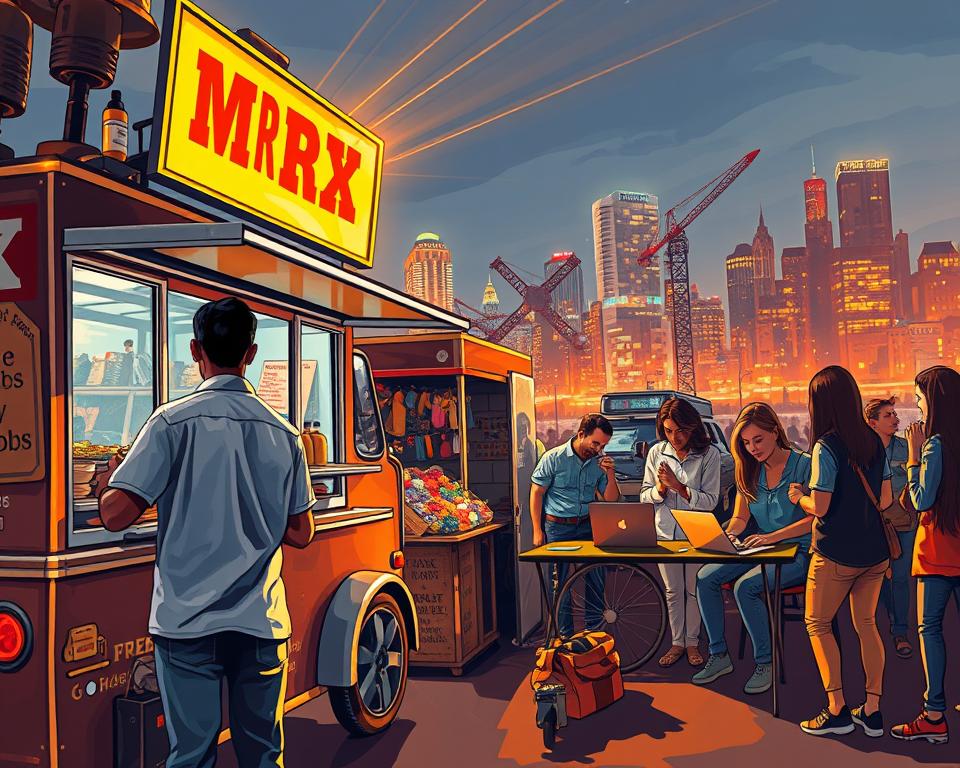
Can hustle side jobs lead to financial freedom, or are they just for extra cash? The gig economy has grown, making side gigs popular. Many people use them to earn more and follow their dreams. Studies show side hustles can really increase your income, leading to financial freedom.
Most people working full-time jobs put in 50-60 hours a week. This need for more money is where hustle side jobs shine. They offer a chance to earn extra and gain financial freedom. Side hustles can make thousands of dollars a month, making them appealing for extra income.
Looking to make money with freelance writing, online tutoring, or other gigs? There are many ways to earn more and achieve financial freedom. With the right skills and attitude, your side jobs can become a profitable career. This could give you the financial freedom you’ve dreamed of.
Key Takeaways
- Hustle side jobs can provide a path to financial freedom
- Side hustles can significantly boost income and provide earning extra cash opportunities
- There are many types of side gig opportunities available, including freelance writing, online tutoring, and more
- With the right mindset and skills, you can turn your hustle side jobs into a lucrative career
- Hustle side jobs can provide flexibility and autonomy, allowing you to work on your own terms
- The gig economy is growing, with many platforms and opportunities available for those looking to pursue side hustles
Understanding the Hustle Economy
The hustle economy is a growing trend. It involves people taking on part-time jobs, freelance work, or side gigs to earn extra money. This shift is driven by the gig economy, new tech, and changes in the workforce. About 70 million people in the US have a side hustle, which is 45% of the working population.
Many people take on side hustles because they need more money. With costs going up, they want to cover things like rent, utilities, and food. Freelance work and side job ideas are popular because they offer a chance to earn more and ease financial stress.
Working in the hustle economy has its perks. It offers flexible hours, extra income, and chances for personal and professional growth. But, it also has its downsides, like dealing with self-employment taxes and managing expenses. To do well, it’s important to set realistic income goals, know your expenses, and have an emergency fund.
Key factors driving the hustle movement include:
- Technological advancements
- Changing workforce demographics
- Rising living costs and inflation
- Need for additional income
Understanding the hustle economy helps people make smart choices about part-time hustles, freelance work, or side job ideas. With the right approach, anyone can succeed in the hustle economy and reach financial freedom.
Identifying Your Skills for Side Jobs
To do well in side gigs, you need to know your marketable skills. Look for side hustles that match your passions and strengths. About 45% of people work in the gig economy to earn extra cash.
Assessing Marketable Skills
Think about what you’re good at and what you enjoy. Make a list of your skills, like:
- Technical skills, such as programming or graphic design
- Soft skills, such as communication or time management
- Creative skills, such as writing or photography
These skills can help you find side gigs that fit your strengths and interests.
Passion vs. Profit: Finding Balance
Finding profitable side hustles is key, but don’t forget about passion and enjoyment. Doing what you love makes work more rewarding and boosts your motivation. Look into side hustles that match your hobbies, like freelance writing, graphic design, or virtual assistance.
Popular Hustle Side Jobs to Consider
The hustle economy has grown, bringing many side job ideas. These jobs let people work on their own terms. They match a variety of skills and interests, helping you find the right fit.
Some popular side hustles include:
- Freelance writing and content creation, which can be done through platforms like Fiverr and Upwork.
- Graphic design opportunities, where individuals can offer their services on a freelance basis.
- Virtual assistance roles, providing administrative support to businesses and entrepreneurs.
- Ridesharing and delivery services, such as working as a driver for companies like Lyft or Uber.
These side jobs offer flexible ways to earn extra income. They let you pursue your passions. Whether you want freelance work, part-time hustles, or a full-time career, there’s something for you.
The Benefits of Hustle Side Jobs
Money-making side hustles can greatly improve your financial health and personal growth. The gig economy has made it easier for people to find side jobs. Now, 54% of Americans have a side hustle to make extra money. On average, these jobs bring in about $688 each month.
Side hustles offer a lot of flexibility. They can be part-time, making it easier to manage work and personal life. This is great for those who want to balance their jobs and hobbies. Plus, 65% of side hustlers say they’ve learned new skills from their jobs.

- Extra income streams to help pay off debt or build savings
- Opportunities for personal and professional growth
- Flexibility in work hours to balance work and personal life
Side hustles can help you control your finances and reach your goals. They can help you pay off debt, save for emergencies, or invest in your future. Side jobs offer the financial freedom and security many people seek.
Setting Realistic Income Goals
When you’re into part-time hustles, freelance work, and side jobs, setting income goals is key. Knowing how much time you can put in and what affects your earnings is important. For example, some jobs like selling online or pet-sitting can make a lot of money. You could earn hundreds or even thousands of dollars each month.
Things like market demand, competition, and how much value you offer can change how much you make. It’s smart to study your market and see what people are willing to pay. Also, think about how much time and effort it takes to do your job.
Jobs like freelance writing, graphic design, or virtual assistance can also bring in steady money. But, remember, quality work takes time and effort. By knowing what affects your earnings and setting smart goals, you can make a side hustle that pays well and lasts.
Finding Reliable Platforms for Hustle Jobs
Finding side gig opportunities requires knowing where to look. The gig economy has grown, offering many platforms for making money. From freelance websites to gig economy apps, the choices are vast. Here’s a list of reliable platforms for finding side hustles.
Freelance websites like Upwork, Fiverr, and Freelancer are popular. They offer a wide range of jobs in different categories. Freelancers can earn over $7,000 in their first year on Fiverr. Gig economy apps like TaskRabbit, Wonolo, and Airtasker also provide flexible jobs.
Platforms like SolidGigs and FreeUp focus on curated freelance jobs. They connect clients with top freelancers. Some freelancers earn over $50 per hour here. When choosing a platform, look at fees, job listings, and user reviews.
Exploring these platforms can help you find side gigs that match your skills and interests. This way, you can earn extra cash through money-making side hustles.
Marketing Yourself Effectively
To succeed in freelance work, you need to market yourself well. This means creating a strong personal brand and showing off your skills to clients. Building an online portfolio is a great way to do this. It should highlight your expertise and experience in various side jobs and hustles.
A good portfolio can make you stand out and attract clients who are willing to pay more. Also, using social media can help you reach more people. By sharing interesting content and talking to your followers, you can become known as an expert in your field. This can lead to more opportunities.
- Utilizing online platforms to showcase your skills and services
- Creating valuable content that resonates with your target audience
- Engaging with your followers and building a community around your brand
By using these strategies, you can get more visibility. This will help you find new opportunities in freelance work, side jobs, and hustles.
Balancing Full-Time Work with Side Hustles
Managing a full-time job and a side hustle can be tough. But, with the right strategies, you can earn extra cash and pursue side hustles without losing your main job. Many people take on side hustles to make more money, with nearly 10% of American workers doing so.
To balance both, time management and setting clear boundaries are key. You might dedicate 5 hours a week to your side hustle. Or, use small chunks of time, like 20 minutes, to work on your goals.
Some important strategies for balancing work and side hustles include:
- Creating a routine with set times for your side hustle
- Setting clear boundaries between your day job and side hustle
- Putting self-care and rest first to avoid burnout
By using these strategies, you can manage your time and energy well. This lets you explore side gig opportunities and earn extra cash without hurting your main job or health.
Tax Considerations for Side Income
If you’re making extra money through part-time hustles, freelance work, or side jobs, you need to know about taxes. The IRS wants you to report all income, no matter how small. If you make $600 or more, you might get a Form 1099-NEC, 1099-MISC, or 1099-K.
It’s important to save some of your side income for taxes. Aim to save 20-35% of it. For instance, if you make $1,000, set aside $200 to $350 for taxes. Not reporting income can lead to penalties, so keep up with your taxes.
Some common things you can deduct as a gig worker include:
- Business mileage
- Dues and subscriptions
- Necessary tools and equipment
- Tuition for work-related education
- Home office deductions
Keeping good records of your expenses can lower your taxes. The IRS has a tool to help you figure out how much to withhold from your side income.
To avoid fines and interest, file your taxes on time and pay any estimated taxes. If you think you’ll owe $1,000 or more in taxes, file Form 1040-ES quarterly. Knowing your tax duties and using deductions can help you keep more of your earnings from side hustles, freelance work, or side jobs.
Tools and Resources for Hustlers
To do well in side gigs, you need the right tools and resources. Many online tools are free or have free versions. This makes them easy to get for those watching their budget. For example, Bluehost starts at $1.99 a month for new users. LeadPages can grow your email list by three times in just three months.
Interact quizzes can bring in hundreds of new subscribers each month. This shows how powerful the right tools can be.
For those wanting to earn more, the right resources are key. Teachable is great for hosting online courses. Ahrefs helps with keyword research, and Canva is perfect for making graphics. Tools like ScheduleOnce and Asana help with managing time and staying organized.
For skill improvement, Udemy and Coursera offer a wealth of online courses and tutorials. These platforms are full of learning opportunities.
- Pretty Link Lite for creating easy-to-remember redirect links
- ClipX for enhancing clipboard management
- Sanebox for improving email management efficiency
- ScreenPal for free screen recordings
These tools and resources can help you maximize your side gig potential. They increase your chances of earning more through side hustles.
Staying Motivated and Focused
To succeed in freelance work, staying motivated and focused is key. Setting achievable goals is vital, whether you’re exploring side job ideas or part-time hustles. Celebrating small wins helps keep motivation high and encourages you to keep going.
Having a support network is also crucial. This can include accountability partners, online communities, or friends and family who get what freelance work is like. Investing in personal growth through learning opportunities can boost your skills and confidence.
Some popular side hustles that can help you stay motivated and focused include:
- Online tutoring, with potential earnings of at least $16 an hour
- Transcription services, with earnings between $20 to $45 an hour
- User testing, with potential earnings of $10 per test
Staying motivated and focused needs a mix of goal-setting, support, and personal growth. By adding these elements, you can boost your chances of success in freelance work and side job ideas.
Challenges of Hustle Side Jobs
Starting a side hustle can help you earn extra cash. But, it’s important to know the potential downsides. Many people struggle with divided focus, lower performance at their main job, and burnout from too much work.
About 39% of Americans feel self-doubt and fear of failing in their side hustles. To beat these hurdles, setting clear financial goals is key. It helps figure out if you need more money because of spending or not earning enough. 
Common side hustle challenges include:
- Managing client expectations and keeping customers happy
- Preventing burnout and finding a good work-life balance
- Staying focused and avoiding distractions to stay productive
Knowing these challenges and how to tackle them can help you succeed in side hustles. This way, you can reach your financial goals by earning extra cash through side hustles and gigs.
Success Stories: Inspiring Hustlers
Many people have turned their side jobs into full-time careers. One person started with a freelance gig that made less than $1,000 in three months. But, they eventually made over $17,000,000 for clients worldwide. This shows how freelance work can grow and become very successful.
Brandon Pearce is another example. He made $1,500 a month from his side business before quitting his full-time job. It took him years to reach this income level. This shows the value of patience and hard work in building a successful side hustle.
Tomas Laurinavicius also found success. He pitched to at least 30 design blogs to find his first clients. He got three clients in the first month and then became a full-time freelancer.
These stories show different ways to succeed in side hustles. They highlight the importance of marketing, managing your time well, and testing your business ideas. Success comes from finding a profitable niche and putting in the time and effort to grow it.
Successful hustlers often talk about the need to keep learning and investing in themselves. They also mention the importance of being adaptable in a fast-changing market. By following these tips and finding a side job that matches their passions and skills, people can boost their chances of success in part-time hustles and freelance work.
The Future of the Hustle Economy
Looking ahead, the hustle economy is set to change in big ways. New tech has opened doors for side gig opportunities. The rise of e-commerce and the gig economy will keep changing the side hustle world.
Digital tools and platforms are becoming more important. Sites like Etsy, Upwork, and Patreon help people show off their talents. Social media is also key, with 44% of young entrepreneurs using it to market their work.
The workforce is also changing, pushing the hustle economy forward. More people want flexibility and to follow their passions. In fact, 65% of Gen Z and millennials plan to keep side hustling into 2025.
To succeed, side hustlers need to be adaptable and keep learning. They must improve their skills and use new tech. By doing this, they can reach their full potential in the fast-changing side gig world.
FAQ
What is a side hustle?
A side hustle is a part-time job or freelance work done alongside a full-time job. It lets you earn extra money, follow your passions, and gain financial freedom.
What are the benefits of having a side hustle?
Side hustles offer flexible work hours and extra income. They also help in personal and professional growth.
How can I identify the right side hustle for me?
To find the right side hustle, look at your skills and what you enjoy. Choose a job that fits your strengths and interests.
What are some popular side hustle options to consider?
Popular side hustles include freelance writing, graphic design, and virtual assistance. Ridesharing and delivery services are also options.
How can I set realistic income goals for my side hustle?
To set income goals, consider how much time you have and the demand for your services. Think about factors that can affect your earnings.
Where can I find reliable platforms to find side hustle opportunities?
Look for side hustles on freelance websites, gig economy apps, and through networking.
How can I effectively market myself for side hustle opportunities?
To market yourself, build an online portfolio and use social media. Create a strong personal brand.
How do I balance my full-time job with my side hustle?
Balance by managing your time well, setting boundaries, and taking care of yourself. This prevents burnout.
What are the tax considerations for side income?
Understand your tax duties, use available deductions, and navigate the tax system well.
What tools and resources are available to support my side hustle?
Useful tools include apps, online courses, and platforms. They help streamline your work and improve your skills.
How can I stay motivated and focused on my side hustle?
Stay motivated by setting goals, finding support, and celebrating your wins.
What are the common challenges of side hustles, and how can I overcome them?
Challenges include managing client expectations and avoiding burnout. Develop strategies to overcome these and achieve success.
What inspiring success stories can I learn from in the hustle economy?
Learning from successful side hustlers can give you valuable insights. Apply these lessons to your own business journey.
What are the future trends shaping the hustle economy?
The future is influenced by tech and changing workforce demographics. Stay adaptable and proactive to lead the way.
About the Author